
Kate and Mark's Innovative Strategies for Eco-Conscious Design

Most design studios treat sustainability as a checkbox. Kate & Mark treat it as a starting point.
The London and Bangalore-based design firm has built its entire practice around one conviction: that beautiful spaces and environmental responsibility belong together. From the materials on their mood boards to the packaging on their deliveries, every decision runs through an eco-conscious filter. Here is how they actually do it.

Material Sourcing: Quality Over Convenience
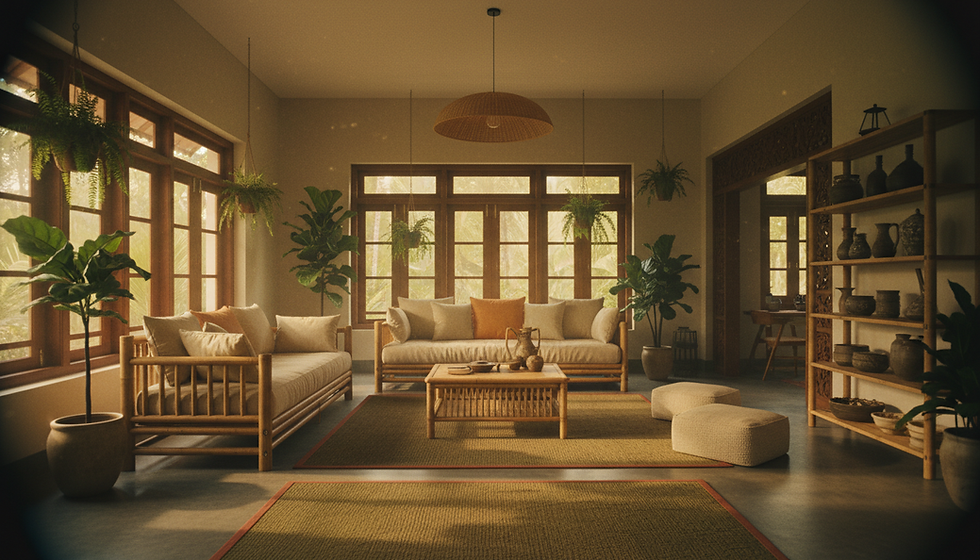
Kate & Mark's material choices are deliberate and research-backed. The studio avoids virgin synthetic materials wherever possible, leaning instead on reclaimed wood, natural stone, bamboo, cork, and organic textiles. These materials carry lower environmental footprints and, critically, they last longer.
One of the studio's most distinctive sourcing practices involves certified deadstock fabrics, high-quality textiles discarded by luxury fashion houses that would otherwise end up in landfills. By redirecting these materials into residential and commercial interiors, Kate & Mark give premium fabrics a second life without generating new demand for resource-heavy production.
Natural fibers like linen, jute, and wool round out their palette. These biodegrade at the end of their life cycle, unlike synthetics that shed microplastics and persist in ecosystems for centuries.
Designing for Longevity, Not Trends
Fast design is as wasteful as fast fashion. A piece of furniture that falls apart in three years, or a space that feels dated in five, generates enormous waste. Kate & Mark's answer is what they call "furniture built to last."
Their 20,000-square-foot manufacturing facility in Bangalore focuses on precision craftsmanship over mass production. Each piece is built with structural longevity in mind, using joinery techniques and solid materials that resist wear rather than hide it. The studio actively advises clients to restore and adapt existing furniture rather than replace it, a practice rooted in the circular economy principle that the best material is the one already in the room.
This commitment also shapes their aesthetic direction. Kate & Mark deliberately avoid trend-driven design, favoring timeless, grounded interiors that clients will love for decades. When a space does not need to be redone every few years, far less ends up in a skip.
Reducing Carbon at Every Step
Kate & Mark think about emissions well beyond the showroom floor. One of the more practical ways they reduce carbon is by minimizing "piece travel," the distance a product travels from manufacture to delivery. By producing locally and shipping regionally where possible, they cut transport emissions at the source rather than offsetting them after the fact.
For shipments that do travel longer distances, the studio contributes approximately $0.15 per shipment directly to verified carbon offset programs. Small per-parcel, meaningful at scale.
Their packaging tells the same story. Standard cardboard boxes carry FSC certification, which confirms the wood pulp came from responsibly managed forests. Mailers are made from cornstarch and bioplastics, compostable materials that break down in home composting conditions rather than sitting in landfill for decades.
Indoor Air Quality and Human Health
Eco-conscious design at Kate & Mark is not only about the planet. It is also about the people living and working inside the spaces they create.
Conventional paints, adhesives, and finishes frequently contain volatile organic compounds (VOCs), chemicals that off-gas into indoor air and have been linked to headaches, respiratory irritation, and longer-term health concerns. The studio specifies low-VOC or VOC-free products across all their projects, from wall paint to furniture lacquer.
They also draw heavily on biophilic design principles: maximizing natural light, integrating indoor plants, and using organic textures to create spaces that feel genuinely connected to the natural world. Research from the WELL Building Institute consistently shows that biophilic environments reduce stress, improve cognitive performance, and support better sleep. For Kate & Mark, a healthy space and a sustainable space are the same thing.
Client Education and Conscious Sourcing
Even the most sustainable studio cannot change much without clients who understand why the choices matter. Kate & Mark invest heavily in client education throughout the design process.
During consultations, the team walks clients through the full lifecycle of the materials being considered: where they come from, how they are made, how long they last, and what happens when they reach end of life. This transparency helps clients make genuinely informed decisions rather than simply deferring to whatever is fashionable or cheapest.
The studio also aligns supplier selection with ethical manufacturing standards. They vet suppliers for fair labor practices, environmental certifications, and transparent supply chains. The result is a sourcing network that clients can trust and that the studio stands behind.
Space Planning That Reduces Waste by Design
Sustainability at Kate & Mark starts before a single item is ordered. Their space planning methodology is built around the idea that smarter layouts reduce the need for excess furniture, decorative fill, and material waste.
A well-planned room needs fewer pieces to function beautifully. Each element earns its place. This approach runs counter to the industry norm of filling spaces to look layered and abundant. Kate & Mark's rooms are considered and intentional, which means less production demand and less eventual disposal.
They apply the same thinking to adaptive reuse of existing structures. Rather than gutting a building or stripping a room back to bare walls, the studio looks for what can be retained, repurposed, or refreshed. Maintaining the existing urban fabric, as they describe it, keeps embodied carbon locked into the building rather than releasing it through demolition and reconstruction.
What Sets This Approach Apart
Many design studios have begun adding sustainability language to their websites. Fewer have restructured their sourcing, manufacturing, packaging, and client process around it. The difference with Kate & Mark is that eco-consciousness is embedded in how they work, not layered on top as a marketing message.
Their 360-degree approach connects material sourcing, manufacturing precision, carbon logistics, indoor health, client transparency, and space planning into a single, coherent philosophy. Each element reinforces the others. And because the studio's aesthetic is rooted in timeless, natural forms rather than trend cycles, the sustainability argument is also the design argument.
Beautiful spaces do not have to cost the earth. Kate & Mark are proving it, one considered decision at a time.
Key Takeaways
Kate & Mark prioritize reclaimed, natural, and certified deadstock materials to reduce production waste.
Their furniture is built for durability and longevity, supporting a circular economy.
Carbon reduction is addressed through local manufacturing, regional shipping, and offset contributions per shipment.
Low-VOC products and biophilic design make their spaces healthier for the people inside them.
Client education and ethical supplier vetting ensure sustainability runs through the full project lifecycle.
Smart space planning reduces material demand from the very first design decision.


Comments